Last night was the first official meeting and it was a big success.
It all started about a month ago, after a lecture at the JCC, I overheard a young man say something about chess.
"Did somebody say chess?" I asked, and I introduced myself.
The young man turned out to be John Hartman, the Omaha Vice president of the Nebraska State Chess Association. He told me that Omaha dies not have a serious chess club for top players. He was trying to set one up, but they currently did not have a place that they could call home. So I said, "they do now!" And that is how Beth Israel got to be the center of serious chess in the state of Nebraska.
The club is named for Jack Spence (born c. 1926 died 1978). Spence was a Chess enthusiast who took upon himself to be the official chronicler of all serious games played in Omaha. Back when chess masters used to tour from city to city (before the internet put an end to that) Omaha had its share of famous chess masters pass through. Jack Spence would record the games and type them up, leaving space for diagrams which he would import later. Then he would have the books bound and sometimes published.
Jack Spence
Spence may have been one of the most prolific chess chroniclers in the country. By trade he was a lawyer but his life was chess. He died before his time, but because of his efforts Omaha has a rich recorded history of chess. It is very fitting to name the club in his honor.
Last night was the first event. Doors open at 7 but when I arrived to open up at 6:30 there was already a line of people waiting by the door.
Our first event was a blitz tournament. 5 minute games. All the stars came out last night. We had Joe Knapp, last year's Nebraska State champion, and Ben Fabrikant, this year's champion and member of Beth Israel synagogue. (I got to take my picture with both of them!)
We had a full house and everyone had a great time. We will meet every Tuesday night from 7 to 10 (except Jewish holidays) and in the future we will have lectures, rated play, and even tournaments - including the city championship!
We are really privileged to be able to host the Spence Chess club. This will be great for the city of Omaha.
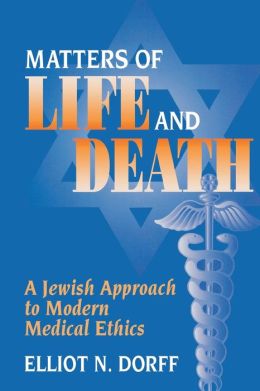
Last night I went to hear Rabbi Elliot Dorff speak at Beth El, Omaha's Conservative synagogue. Rabbi Dorff is the Conservative movement's highest authority on medical ethics. For the Conservative movement he is arguably their Gadol Hador - leading Rabbi of the age. It was really great to hear him speak in person.
Today I had the privilege of being able to drive him to the airport. I intentionally took the most circuitous route to the airport so that I could maximize the drive time with him.
He is one of the nicest people I have ever had the pleasure of meeting. I really enjoyed talking with him in the car. I was so impressed by how knowledgeable and thoughtful he is on so many different topics and how forthcoming he is about honestly and openly discussing any subject. It is clear that this is a man of great humility, honesty, and integrity.
He presented an interesting argument. There are some authorities who believe that there is nothing new under the sun and for every contemporary issue that arises there are traditional Jewish sources that address the issue. Whether it be organ donation, stem cell research, human cloning, or space travel, one need only look carefully at the ancient sources of the Torah, Talmud, and codes and one will find that the ancients offered us guidance on all of these issues.
Rabbi Dorff rejects this assumption. Whereas he does acknowledge that the ancients did have the wisdom to address a great number of timeless issues, they could not even imagine most of the issues and moral dilemmas presented by modern scientific discoveries and technological advancements. If they could not imagine these issues, then their writings can offer us no guidance on these matters. So rather than search the ancient sources for specific precedent for contemporary issues, in modern times we should be guided only by general core Jewish principles and values when making decisions.
I have not read his book yet so it was not completely clear to me whether there are practical differences between the way he would address a particular issue versus the way that an Orthodox medical ethicist would address the same issue.
Although he spoke last night at the Conservative Synagogue, he was brought to Omaha by the ADL to address non-Jewish audiences on Sunday and Monday.
I have always found it interesting that the non-Jewish world generally looks to non-Orthodox thinkers for guidance on Jewish ethics. The shelves of Barnes and Noble mostly feature the works of non-Orthodox writers who skillfully articulate their message for the masses.
Which leading Orthodox Rabbis have authored books that have been best sellers or that are viewed as universally relevant (other than Shmuley Boteach)? When was the last time that a Rosh Yeshiva from Yeshiva University or Lakewood was asked to address the AMA about medical ethics? There are a few Rabbis who are regarded outside the Orthodox world as experts - Rabbis J. D. Bleich and Michael Broyde come to mind - but they are exceptions, not the rule.
That is not to say that Orthodox Rabbis have nothing to say about contemporary issues. On the contrary, they have much to say:
volumes and volumes have been written on wide range of subjects, probably much more so than by Conservative and Reform writers.
Orthodox shuls and institutions regularly feature lectures on contemporary topics.
Rabbi Moshe Feinstein, considered by Orthodox Jews to be the 20th century's greatest decider of Jewish law, wrote extensively on a host of contemporary issues, and 30 years after his death Orthodox scientists and doctors still consider his works as informed, insightful, and authoritative.
But somehow the impact is not felt by the non-Orthodox Jewish community, and certainly not by the non-Jewish community.
Granted, most serious Orthodox works on medical ethics are written in Hebrew, but if these works had the potential to make an impact they would quickly be translated into English.
There are several reasons that I think Orthodox medical ethics do not make an impact.
Orthodox authors deal with issues and problems that are presented by modern advances in medicine, but many of these "issues" and "problems" are only relevant if the doctor or patient is an Orthodox Jew. There is extensive literature on issues like whether or not a particular procedure can be performed on Shabbat or whether certain medications are kosher for passover and other such ritual conflicts that are not apparently relevant to the masses.
Many positions taken by modern authorities are predicated on the opinions of ancient authorities who lived hundreds, sometimes thousands of years ago. While these ancient positions are binding to an Orthodox Jew, a non-Orthodox Jew and certainly a non-Jew has a hard time understanding how the answer to a question can come from someone who lived centuries before the question was even asked.
And finally, many Orthodox ethicists express their positions on issues as if they were based ONLY on Scriptural or Talmudic sources without providing a compelling logical or moral basis.
To be clear: whenever I am presented by my congregants with ethical dilemmas presented by modern medicine -which is not so uncommon unfortunately - I immediately turn to the Orthodox Rabbinic authorities who I know and trust. I happen to know quite a few who despite the many demands on their time make themselves readily available to community Rabbis like me and my colleagues throughout the country.
These Rabbinic authorities that I have consulted with in the past are completely knowledgeable on any given medical issue. Often they are more knowledgeable then the doctor that I am dealing with simply because these expert Rabbis often have more experience with the rare morally complicated cases and the Rabbis are usually more up to date on the literature pertaining to these ethical issues than most doctors are. Doctors are skilled in the procedures but in many instances they have not taken the time to think through the greater consequences to certain actions the way that these expert Rabbis have.
In actual cases these authorities weigh every issue independently and take into account as many facts and variables as it is possible to account for in real time. In the many times that I have had to consult, I never felt that a Rabbinic authority provided me with an answer that was not informed, rational, logical, and based in a morality that was easily understandable. I have the greatest respect for the Orthodox Rabbinic authorities.
That is exactly why I want them to make a greater contribution to general society. I do believe that the Torah offers valuable insight that is completely relevant to contemporary problems and that the world would benefit a great deal if Orthodox experts on medical ethics would make the wisdom of the Torah available and accessible through articulate writings that make the underlying morality of Jewish law more apparent.
But as Pharoah said, "Could we find a man like this in whom is the spirit of God?"
Admor Tzvi Hersh Morgenstern of Lukav - the great grandson of the Kotzker. The Kotzker Reba was his Sandek.
In recent years Mitch has sought out every book every written on the topic of Polish Chasidism, including personal memoirs, philosophical works, and Torah commentaries and he has become quite an expert on the subject.
Mitch spoke at Beth Israel and gave us some of the basics of the Polish Chasidic dynasties, who the major players were, and what made their brands of chasidism unique.
He mostly focused on the Kotzker Rebbe, his teacher - the Rebbe Rav Bunim, the Yid Hakadosh and the chidushei HaRim. We traveled back in time over 200 years and learned a greet deal about Polish and Russian history. The Rebbe's of the early 19th century carefully watched the current events of their day and took stances and positions that sometimes would get them in trouble with the reigning government.
There was also a great deal of internal politics. That time in history was a time of great transition for the Jewish community in Poland and there was fear that the consequences of certain philosophies could jeopardize the future of Judaism. The followers of the Rebbe Rav Bunim were considered controversial in the Chasidic world and in a biography of the Chidushei HaRim we learned about some of the politics in the Jewish community and how these Jewish leaders handled them.
We also learned some of the Torah of the Kotzker. Although he left us no writings there are many books written on his teachings and his sayings are very famous.
One that sums up the Kotzker is as follows:
There is a well known custom on Rosh Hashannah that we do not eat nuts at the meals. The reason given in the SHulchan Aruch is that the Hebrew word for nuts, egoz, has the same numerical value as the word for sin, cheit. The Kotzker said about this, "more importantly, people need to remember that the numerical value of cheit is also cheit!"
In other words, people often get caught up in all of the symbols and customs and they tend to forget the actual meaning behind them. So they will be careful to avoid having nuts on Rosh Hashannah, but will be lax in making sure that sin is also absent from their lives.
It was a really great Shabbat. I hope to bring Mitch back for another Shabbat in the future so we can learn more about this area of Judaism that many Jews are not familiar with.
Today was YomYerushalaim - the anniversary of the day in 1967 when the Jewish people liberated the city of Jerusalem, the Western Wall, and the Temple Mount.
In those six days in 1967 the Jewish people went from fearing another Holocaust to achieving an unprecedented military victory and reclaiming the historic cities of Hevron, Schem, Shiloh, Beit El, and the heartland of the state of ancient Israel.
The Six Day War had a profound impact on Jews around the world. Being a Jew in May of 1967 was different than being a Jew in July of the same year.
Jews around the world who were ashamed to be Jewish suddenly felt a surge of Jewish pride. The Jewish chest stuck out a bit more. A star of David necklace could be worn above the shirt.
Many Jews were inspired to move to Israel. Some say it was the beginning of a wave of Jews returning to their Jewish roots.
Natan Sharansky has said many times that he remembers huddling around a radio in secret in Communist Russia and hearing the famous words "The Temple Mount is in Our Hands" He said that they didn't know what the words meant, but they all knew that they were proud to be Jewish. And it filled them with hope. If Israel could overcome their struggles, they could too.
Yom Yerushalaim is celebrated by Jews around the world as a day of joy and thanksgiving.
As we said Hallel this morning I had a chilling thought. I imagined a parallel universe where the Arabs won the war in 1967. In this alternate world the 28th of Iyar is a day of mourning and lamentations to commemorate the tragic destruction of Israel and the death of millions of Jews. There are museums and monuments set up to remember the short lived Jewish State, and at a special ceremony held on this day the US president and world leaders gather together to give speeches and to say "Never Again!"
The trauma of a second Holocaust so soon after the first was too much for the Jewish people to take. Jews abandoned their Judaism en mass. Around the world synagogues lay empty. Assimilation increaased dramatically. Without Israel as a focal point there was nothing left to unite the Jewish people. The JEwish nation fell apart.
Without Israel the Middle East had no democratic presence.
There was still no Palestinian state. The Arabs who lived there continued to suffer as Egypt, Jordan, and Syria fought for control over the land. Without Israel the world was not interested in helping them form a state of their own.
Islamic fundamentalism continued to grow in the region, and without Israel as a scape goat all of the ire was focused on America.
Iraq was the first to develop nuclear weapons as their was no country to prevent them from doing so. The other Islamic countries soon followed. Life in that world is bleak.
Thank God Israel won and the Jewish people live on! And while I doubt that the president and other world leaders will flock to Jerusalem or Hevron to celebrate their liberation any time soon, we know that the world is a better place because of Israel's victory on that day. Yom Yerushalaim is a pivotal day in the history of the world. May Hashem continue to bless His people and His land. May Israel and its people dwell in security. And may Jerusalem, the land of Israel, and the entire world soon see a day of peace, prosperity and happiness for everyone. Happy Yom Yerushalaim!
Yesterday I posted an ethical question that was posed at my Shabbat table last week. "Is it ethical to work the system and cash in on credit card rewards with no intention to be a customer?" There was a great deal of off line discussion on the matter. My uncle Mark Honigsfeld (yes the same famous Uncle Mark who had the idea to sell Warren our chametz!) sent the following response which I found informative and compelling:
Credit card companies (CCC) are managed by some of the savviest known business minds in the financial world. They are also experts in marketing strategies (often referred to as gimmicks) to lure consumers using legitimate legal methods of what many consumer advocates would call "bait and switch".
Credit card companies, as you noted in your blog, earn their fees in different ways. It would be totally naive to believe that CCC don't expect a certain percentage of consumers to take full advantage of the offer and subsequently canceling or not renewing their subscription.
As by your example, I don't equate this to shoplifting but would offer a different example:
If a store were to run a sale and promote the sale as follows "selling the 1st 100 customers a certain item at below cost" I assume there would be no question of ethics regarding anyone who arrives 1st, intending only to purchase the item on sale. Although the full intent was for the store to lure you in and expect you to purchase something else while in their store. Does this pose any moral or ethical question?
Is intent not to respond to a promotion in a way the merchant "may" have hoped for considered unethical or rather is it merely a consumer's inherent rights in fair dealing practices?
So too as my example above, with these offers from the CCC, they lure you in, hoping to get a long term customer and with that "bait" they offer you a promotion. The majority of subscribers do in fact keep the card, and those who don't have given the CCC other fair consideration and financial returns.
Fees for the sales that the consumer must purchase with the card for the consumer to earn the rewards, also get paid fees from the merchant.
In some cases consumers who intentionally think they will beat the system, pay exorbitant interest charges when they are not able to pay off the CC balance at end of billing cycle. CCC know this fact and factor it in to the cost of the promotion.
Awards often expire and also become worthless. This is known as breakage and is also used in calculating the cos of any promotion.
CCC also use the data the consumer provided when applying for the credit card for marketing purposes and often sell this information to mailing list houses for significant fees.
When one understands the profiteering that results when such offers are made by CCC then one should be comfortable in taking full advantage of the offer. If canceling the card after awards are realized are of concern, then I would think the CCC would charge a penalty for doing so but they don't because they understand the business advantages not to do so. This is one man's opinion which is not based on Halacha but rather an understanding of business and as a credit card merchant.
I was asked an interesting ethical question at my Shabbat table and I am not sure of the answer.
Credit cards offer certain deals to potential customers. They offer airline miles, points, or cash for people who sign up and spend a certain amount.
There is a whole genre of blogs that search for these deals and share them with their subscribers. They instruct their subscribers on how to game the system: sign up for the deal, receive the reward, and then cancel the card.
Is it ethical to play the credit card rewards game?
On the one hand, I am certain that the credit card companies factor in the people who learn to work the system. They are offering the deal and must realize that people can take advantage of it. They must factor that into their costs.
But grocery stores factor shoplifters into their pricing too.
Or perhaps the credit card companies profit from the people who work the system. Maybe the fees that they receive from the vendors offsets the rewards that they give the customers.
Or perhaps the credit card companies are counting on people signing up for the card thinking they will profit, while most people end up forgetting to cancel, or end up becoming a regular customer.
This Shabbat thousands of people are flocking to Omaha for the Berkshire Hathaway annual meeting to attend the Warren Buffett Shabbaton.
Unfortunately the meeting is on Shabbat and Jewish people have a conflict as we have a weekly meeting with The One who has even more money and wisdom than Warren Buffett and to whom the entire world is His subsidiary.
Fortunately because of YouTube none of us has to miss out on the main event of the meeting..
The Talmud teaches that certain things are 1/60th of something else. Meaning, if you want to know what some unattainable experience is like, there are available experiences that represent a small taste.
For instance, we can no longer taste the maan that the Jews ate in the desert for 40 years, however honey is 1/60th of the maan. Taste some honey and whatever that tastes like, multiply it by 60 and that is what maan tasted like..
Not everyone has the capacity to experience prophecy, however, a dream is 1/60th of what that experience is like.
I sincerely believe that the Berkshire Hathaway annual meeting is 1/60th of what is was like to be in the dessert with the ancient Israelites learning Torah from Moshe Rabbeinu.
Some might say it trivializes Moshe Rabbeinu to compare him to Waren Buffett. After all, you may say, Moshe gave us the Torah. All Warren Buffett did was make a big pile of money. How can they be compared? Even as 1/60th?
I would argue that Warren Buffett represents so much more than just a big pile of money. His speeches - which constantly draw from stories, parables, and wisdom ancient and modern - are sometimes less about money and more about how a person should conduct himself honestly, ethically, and with integrity.
Never the less, it is true that ostensibly, he is mostly talking about money.
But I am not talking about the substance as much as the experience.
A few days ago those who learn Daf Yomi learned how Moshe and his brother Aharon sat side by side with the other leaders and taught the Torah to the nation. The Jewish people gathered and sat at the edge of their seat reveling in every word that came from the mouth of Moshe.
When Moshe's father in law first Yitro visited the camp of Israel, he saw how the people waited day and night on long lines to have a chance to speak with Moshe, even if only for a minute.
Moshe was more than just a leader. The historian Josephus says that Moshe's impact on the Jewish people was so profound that even thousands of years later the Jewish people obeyed his laws as if he were alive and standing before them. This was not out of fear of Moshe, but out of love for a great leader who saved them, who cared for them, who fed them, and who lead them through the perilous dessert for 40 years. But mostly they loved Moshe for transmitting the Divine wisdom to our people.
Today in Omaha the excitement is palpable. People are waiting with great excitement for their great leader, Warren Buffett, to speak. They have traveled great distances to come to Omaha, Nebraska which many of them consider the wilderness. Tomorrow they will push and shove and squeeze into the convention center to hear words of wisdom from the man that they so admire and wait with excitement and anticipation for every word that comes from his mouth.
Tomorrow Warren and Charlie Munger sitting side by side will be like Moses and Aharon teaching the Israelites. They will share their wisdom and the people will learn and rejoice.
Tomorrow the speech will be about investing, but one day those crowds will gather once again to hear the words of the Torah. The people will gather - "the men, the women, and the children ,and the stranger who is in your cities - so that they will hear and so that they will learn and they shall fear Hashem, your God, and be careful to perform the words of the Torah." (Devarim 31:12)
Imagine a national convention where the world's smartest people will speak of justice and righteousness, and we will all rejoice in their wisdom. The Berkshire Hathaway annual meeting gives us a taste as to what that will be like.
I, however, will have to miss the crowds tomorrow and catch the speeches after shabbat on youtube, which is fine with me. I will be with my community in shul celebrating Shabbat - which as the Talmud says - is 1/60th of heaven.
Every year i like to mix up the Hagaddahs that I use at the Pesach seder. This year I have some good ones picked out for my own personal seder. Here are this year's Hagaddah picks:
In 1984 Jerry Seinfeld performed at Yeshiva University. Rabbi Neil Fleischmann told me that because he was not so famous at the time he only attracted a small audience. (His opening line was "wow, Yeshiva University. I am not sure if I should do my routine or my haftarah!") Years later when Seinfeld achieved superstardom, those who went to hear him and had a chance to meet him personally remember fondly how they knew him when.
Last week Beth Israel had the privilege of hosting the great Jewish scholar historian Dr. Marc Shapiro. I truly believe that those in Omaha who came to learn from him this past Shabbat will one day recount how they had an opportunity to hear and meet Dr. Shapiro before he was world famous.
Dr. Shapiro is the chair of Judaic studies at the university of Scranton and has written numerous books and articles on Jewish history, philosophy, and theology. (wikipedia) He is considered by many to be one of the fastest rising stars in the world of Jewish historical scholarship.
I have been a big fan of Dr. Shapiro's writings for some time through his books and articles. He is a contributor to the seforim blog and a lecturerer on Torah in Motion.
When he speaks he does so much more than just convey information. He expands your mind and challenges you to think more. After the lecture you not only know more, you are qualitatively smarter than you were before the lecture.
Dr. Shapiro is a wealth of information on any area of history and he delivers his information in a clear and organized manner. He never sensationalizes historical figures. He does not indulge in anecdotes but rather presents historical figures only through their writings and the direct impact that they had. His approach is never speculative.
Dr. Shapiro is brutally honest in his presentation of significant Jewish personalities, which to a large degree include venerated Rabbis. This has made him somewhat controversial. He presents them and their philosophies in full. He presents the strengths and weaknesses of their works and thoughts. He does not shy away from presenting ideas, rulings, or actions that may appear to us as absurd or sometimes even immoral in hindsight. But he is always respectful and he gives us a full historical background so that we can understand these great men in the context in which they lived. He shows that if we were faced with the same tensions and challenges that they faced we may have made the same mistakes.
He presents information objectively, but does not remain completely objective. He presents conflicts and tensions between different schools of thought of great thinkers of the past. He pits two conflicting ideas against each other and shows how those tensions are still relevant today. He lays out the calculus of the equations presented by moral dilemmas, explains the costs and benefits of both schools of thought, and usually courageously opines as to what he thinks is the right course. These views can always be applied to modern tensions and always leads to stimulating discussion.
As an example, on Friday night he spoke about Orthodox Judaism's response to non-Orthodox Judaism in Germany in the 19th century. At the time the Orthodox leader in Germany was the great Rabbi Shimshon Raphael Hirsch. Hirsch is famous for his advocacy of Orthodox Jews engaging in the modern world and is referred to by many as the father of modern Orthodoxy.
Lesser known was his strict position on Orthodox separatism. He believed that the Orthodox in Germany should separate themselves completely form the non-Orthodox community. At some point he went head to head with Rabbi Seligman Baer Bamberger who at the time represented the more traditional Orthodox approach. Rabbi Seligman was opposed to the Hirshian attitude of engagement in the modern world. While is was expected that Rabbi Seligman would side with Rabbi Hirsch on the issue of separatism, ironically he was not in favor of Orthodox Jews seceding form the general community. Dr. Shapiro suggests that Bamberger's leniency on this issue stemmed from his stringency in other areas. Bamberger and his followers acted so vastly different from the Reform Jews so he had no fear that the Reform would have a great deal of influence. By contrast, the more "modern" Orthodox were similar in many regards to the Reform Jews and Hirsch felt that mingling and coexistence would have a negative influence on his followers.
In his defense, Hirsch countered in a letter to Bamberger that had Hirsch's philosophy been around two generations earlier there would have been no Refrom because the traditional Orthodox model presented Jews with a false dichotomy where they had to choose between either the secular world or the Jewish world. Seemingly, Reform presented them with the only alternative.
On Shabbat Dr. Shaprio spoke about the great early 20th century Rabbi Avraham Yitzchak Kook and his philosophy. He outlined the major points of his philosophy and showed how it is relevant today in Israel and throughout the Jewish world.
But he also presented some critiques of Rav Kook's philosophy.
Rav Kook believed that the non-religious atheist Zionists were really part of God's master plan. Whereas they thought that they were building Israel for the sake of some socialist non-religious utopia, in reality they were just laying the ground work for the messianic era where everyone will recognize God.
While this sounds wonderful and inclusive, at a symposium in Israel in 1985 commemorating the 50th anniversary of Rav Kook's death, Rabbi Aharon Lichtenstein pointed out that this attitude is condescending and it negates people's thoughts, motives, and ambitions. Dismissing people's true intentions and pretending that they are actually just working to serve your own agenda, even if they don't know it, is very disrespectful to others. Better to understand your opponents and at least allow them the dignity of their own ideals, even if they differ from your own.
But as always, even when Dr. Shapiro presents critiques he does so with the utmost respect and it was clear that he indeed is a great admirer of Rav Kook.
On Shabbat afternoon Dr. Shapiro and I had an arm chair discussion where he took questions form the congregation. He discussed a variety of topics including women in Orthodoxy, Orthodox attrition, and Orthodoxy's relationship with other denominations.
All of his answers were subtle and complex, yet clear and reasonable, and always positive and optimistic.
Regarding the question of Orthodox children leaving the fold, he pointed out that our generation has the lowest attrition of Orthodox youth than any generation since the enlightenment over 200 years ago. At the beginning of the 20th century it was only a small minority of Orthodox parents that were able to pass traditional Judaism down to their children. Today the percentage of children who maintain their parents tradition is overwhelming.
We had a large crowd from other synagogues who came to ask questions. The recent New York Times piece about "The Orthodox Surge" was mentioned and the question of why Orthodox Judaism seems to be on the rise while Conservative Judaism - 50 years ago considered the future of American Judaism - seems to be in sharp decline nationally.
Dr. Shapiro mentioned half joking (and he said I could quote him) that if he were in charge of non-orthodox Judaism he would CANCEL YOM KIPPUR. He explained that there is a large number of non-orthodox Jews who only show up for Yom Kippur services, a long and somber event. This then becomes there only view of Judaism and they are not interested. If they are only going to show up twice a year then let it be Purim and Simchat Torah instead of Rosh Hashana and Yom Kippur. That way their view of Judaism will be joyous rather than somber.
He also openly discussed his view of Orthodox women Rabbis, saying that he thinks there is no problem and there is long historic precedent. He thinks, however, that changes must be implemented in modern times in a more organic and natural way, rather than imposing ideas or institutions on a community that may not be ready to accept them.
A highlight of the weekend was taking Dr. Shapiro to meet with Rabbi Kripke at the Blumkin Home. Rabbi Kripke, Hashem should bless him, is now 99 years old, and occupied a time in history that Dr. Shapiro studies. He was ordained by Professor Louis Finklestein at the Jewish Theological Center in 1937. He was also a student of Mordechai Kaplan. Dr. Shapiro got to ask Rabbi Kripke all sorts of questions about his experiences and encounters with these and other notable historic figures. It is always a great privilege to hear Rabbi Kripke talk about his past. May he be blessed with many more years of good health!
Having Dr. Shapiro here in Omaha was really a great treat. I hope that we have an opportunity to host him again someday.
In addition to the Teens 4 Israel our delegation included a dozen people from Nebraska, making this our largest delegation in history. Next year we hope to at least triple that number.
The conference alternates between plenaries for everyone and smaller breakout sessions. The plenaries take place in the large auditorium and are attended by all 13,000 conference participants. They feature the headline speakers which included the Prime Minister of Israel Netanyahu, Former Prime Minister and current defense minister Ehud Barak, and the Vice President of the United states Joe Biden.
The dozens and dozens of different break out sessions are given on a wide variety of topics, each given by the top experts in the field. Every speaker could be a headliner in their own right.
AIPAC enables participants to preselect their sessions before the conference. At our last meeting we made our selections and the kids were ready to go.
While they attended that lecture I went to a special session for Rabbis where we got a chance to hear from Lord Jonathan Sachs, chief Rabbi of the United Kingdom. I am a huge fan of Rabbi Sachs. Over the conference I had the opportunity to meet him personally. At one point during the conference his director of communications and programming approached me and thanked me for always mention rabbi Sachs on Twitter. (@chiefrabbi)
Rabbi Sachs gave the Rabbis some inspiring thoughts on Israel and on Pesach which I would share, but there were 350 rabbis in the room and I imagine most of them, including myself, will incorporate those thoughts into our pesach sermons. I don't want to ruin the surprise.
In addition to hearing great speakers the kids were also thrilled to meet Jewish celebrities like Israeli ambassador to the US Michael Oren, former director of national NCSY Rabbi Steven Burg, and "America's Rabbi" Shmuley Boteach. Sadly Rabbi Shmuley did not attend the conference as a congressman this year like he wanted to.
Teen 4 Israel Max P. with Rabbi Steve Burg
We left the hotel early Monday morning so that we could get through security to get good seats for the opening plenary. This was only my sixth AIPAC conference. I have heard that 10 years ago it was hard to get a minyan. At this conference yarmulka clad heads were everywhere you looked and there were multiple options to daven shacharit minchah and maariv. We joined a 7 am minyan in one of the conference rooms (there is even a daf yomi class at AIPAC) and then headed straight to the main ball room. Security was tight because the featured speaker was the Vice president of the United States, Joe Biden.
Before Biden there was a panel discussion moderated by Dan Senor, author of the book Start up Nation. The Teens 4 Israel had read start up nation. They met Dan Senor when he came to speak in Omaha two years ago. They are all big fans.
On the panel was Senator John McCain. It was a great panel. The issue of Syria came up. There is a great deal of uncertainty around Syria. On the one hand it is a humanitarian crisis. 80,000 have already been killed and almost a million people have been displaced. On the other hand, to assist the rebels and oust Assad may allow the Syrian stockpile of chemical weapons to reach the hands of radical terrorist groups.
McCain took a strong stand in favor of assisting the rebels and ousting Assad.
He said it was a great shame that we have so far done nothing.
Then VP Joe Biden took the stage. He is a truly great speaker. He held the audience captivated for a long time. He spoke about all of the things that the US has done to support Israel during the last four and a half years. He contends that Israel has never had a better friend than president Barack Obama.
He came out and openly said that Hezbollah is a terrorist organization - something that other nations have yet to do.
He said that Assad must go but we cannot support another terror regime in his place.
He said when it comes to preventing Iran from going nuclear president Obama is not bluffing and a military option is on the table.
He also said that he wants to exhaust every diplomatic option before we get to a military option.
He said that when he visited Europe with his family his first stop was to see the Dachau concentration camps.
He ended by saying that Obama is going to Israel and Biden is jealous because Obama can now say "this year in Jerusalem."
it was a great speech and there was really nothing to argue with. I hope that the historic relationship that Israel has had with the US continues throughout the Obama presidency and beyond.
After the vice president we heard a presentation from Team Space Israel. They are working to send a shuttle to the moon and finally get an Israeli flag up there.
We heard form the widow of Israeli hero and astronaut Ilan Ramon. I remember exactly where i was when I heard that he had died. She subsequently lost her son who was also a pilot. It was very moving to hear her speak with such optimism for the future.
Prime Minister Netanyahu joined us from his office in Israel. He spoke about Iran, Syria, and Palestinian peace.
After the plenary we split up for lunch. I went to a special lunch for Rabbis.
Over 350 congregational Rabbis attended the conference representing over 200 synagogue delegations including 4,500 delegates. As I have said many times, synagogues are the lifeblood of Israel support. Anyone who considers themselves a supporter of Israel should be in synagogue every Shabbat joining the rest of the Jewish people around the world as they learn about and pray for the well being of the state of Israel.
Over the rest of the afternoon we split up and heard a number of different sessions. I heard one about European efforts to prevent nuclear Iran and another on China's Middle East strategy.
One of the kids heard a session given by Eli Groner. Groner is currently the Israeli economic envoy to the US but his real claim to fame is that his grandfather was a Rabbi in Omaha in the 1960s. It turns out that his grandfather bar mitzvad the Omaha teen's father.
Another teen mention that she found many of the speeches too bleak but finally found a session that she really enjoyed - "The Good News in the Middle East."
Later the kids joined up with NCSY groups from all over the country to hear from Howard Friedman. Friedman is a former president of AIPAC. This was his 26th conference. But he has been on hundreds of NCSY shabbatons. He has personally taken over 200 congressmen on trips to Israel. But he said that his most memorable trips to Israel are when he visits with NCSY summer programs like Kollel and TJJ.
At the evening plenary we heard some great Jewish music, heard from Daniel Gold - the man behind Iron Dome, and heard from Republic Majority leader Eric Cantor and from Democratic Whip Steny Hoyer. Israel is a truly bipartisan Issue and every congressman who spoke commented on how despite all other disagreements the US house is unified on its support of Israel.
The next day we went lobbying and got to meet with our senators Johanns and Fisher, and with our reps Terry and Smith. All of our elected officials are staunchly pro Israel.
It was an experience of a life time for the kids. I have already signed up for next year's conference and I hope that the Nebraska delegation continues to grow. Many thanks to all of the generous donors who sponsored the teens 4 Israel. It was a great investment, not only in Israel advocacy by also in the future of our Omaha Jewish community.